


Key Takeaways
- Scratchy, dry eyes can burn, sting, water, and blur your vision.
- Blocked oil glands along your eyelid edges, screen time, and dry air can all play a part.
- Intense itching points more towards allergies, especially if symptoms ease when away from triggers.
- Over-the-counter drops help many people, though a chat with an optometrist first is a good idea.
- Omega-3 fatty acids, warm compresses, and screen breaks support day-to-day comfort.
- In-office options include lid cleaning, meibomian gland expression, and more.
You rub your eyes at your desk. You blink hard at a stoplight on Kent Street. By evening, your eyes feel like sandpaper, and the drops in your bag aren’t doing much anymore.
Scratchy, dry eyes usually mean your tears aren’t doing their job, either because there aren’t enough of them or because the oil layer that keeps them from drying up too fast is compromised. However, it is always best to see your optometrist for a proper diagnosis as symptoms like intense itching can point to allergies, not dry eye. Once an eye doctor in Lindsay at Russell West Optometry finds out which part of the picture is off, your relief plan gets a lot more specific.
What Does Dry Eye Feel Like?
Dry eye doesn’t always feel dry. Some days it feels gritty, like a lash you can’t find. Other days your eyes water so much you’re dabbing them in the grocery line.
Dry eye can show up in a few different ways, including:
- Burning, stinging, or a scratchy feeling
- Redness and sensitivity to light
- Blurry vision that clears when you blink
- Watery eyes reacting to the irritation
Intense itching points more toward allergies, especially if symptoms ease when you’re away from triggers, which is why seeing your eye doctor before starting any treatments is important.
Signs Worth an Eye Doctor Visit
Symptoms sticking around for weeks are worth a closer look, especially if drops used to help and no longer do. The same goes for pain, or for contact lenses you can’t wear past mid-afternoon anymore.
If only one eye is affected, book an appointment. That pattern gives the team something specific to check.
Common Reasons Behind Dry Eye
Sometimes your eyes simply don’t make enough tears. Other times, tears are present, but their quality isn’t right, so they evaporate before they can keep the surface comfortable.
Blocked oil glands along the edges of your eyelids are another common piece. Age, hormonal changes, and certain medications can also factor in, which is why the conversation at your exam covers your health history, not just your eyes.
Everyday Factors
Long stretches at a screen mean less blinking, and less blinking means less relief. Wind on a walk by the Scugog River, woodsmoke, and dry indoor air in a Kawartha Lakes winter can all leave your eyes feeling raw.
Contact lens habits matter too, and wearing lenses longer than prescribed or stretching a pair past its replacement date can add to the irritation.
Eye Drops for Dry Eye Relief
Over-the-Counter Options
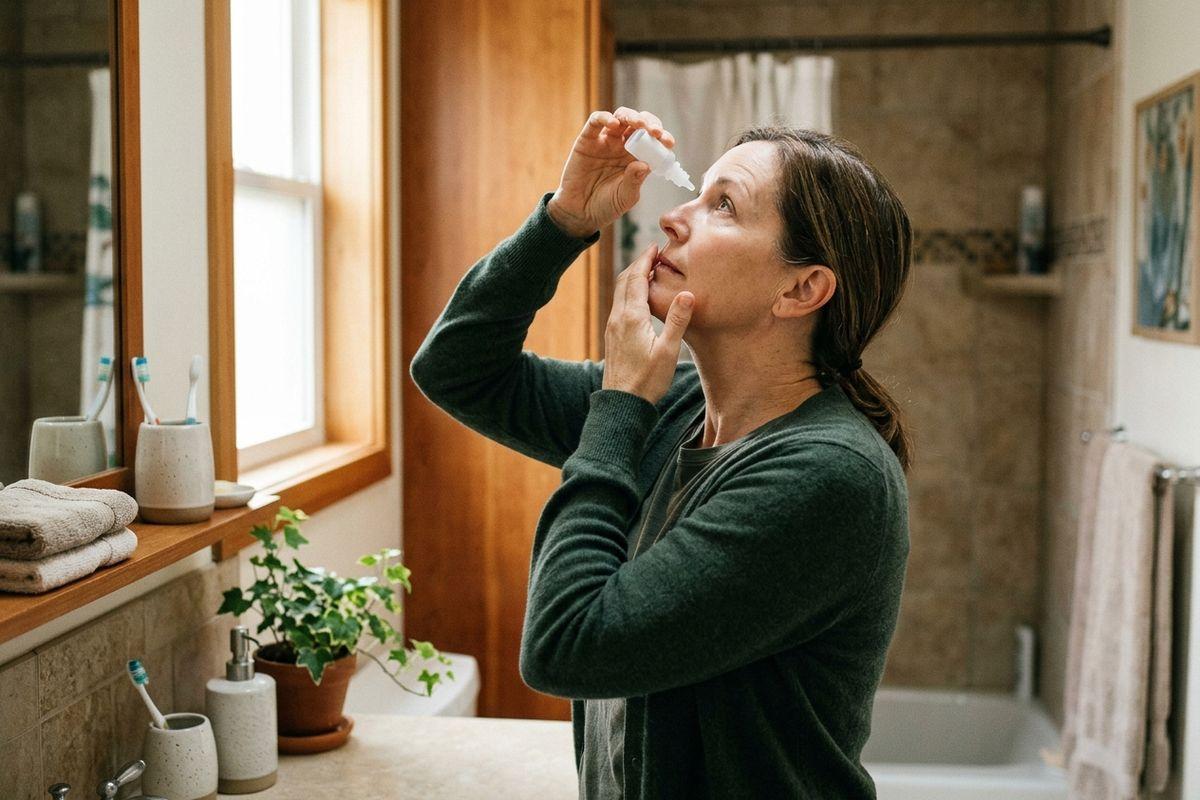
Many eye drops sit right on the pharmacy shelf, and they’re often the first step. Over-the-counter drops contain humectants, lubricants, and electrolytes.
Ask your pharmacist about gel and ointment forms as well. These stay in the eyes longer, which makes them well suited to overnight use.
Talking to an optometrist in Lindsay before you start is still the smarter route, since the right drop depends on what’s behind your symptoms.
Prescription Drops
Depending on how severe your symptoms are, your eye doctor may write a prescription for medicated drops. These typically include medications for chronic eye problems, and they can reduce inflammation and support your natural tear production.
Lifestyle and At-Home Habits That Help
Your diet plays a role in keeping your whole body healthy, and your eyes are included. Adding omega-3 fatty acids to your diet may help reduce dry eye symptoms, so think salmon, walnuts, or ground flax stirred into your morning oatmeal.
A warm compress is an easy habit to keep, and 5 to 10 minutes with a warm mask over your closed eyes before bed fits into most evenings.
Small changes to your day help too. Look away from your screen regularly, run a humidifier in dry rooms, and wear wraparound sunglasses on windy days.
Quick Comfort When Eyes Flare Up
Keep artificial tears in your bag, on your bathroom counter, and in your office desk drawer so you’re never hunting for them. When your eyes start to sting, close them for a minute and then blink fully several times, all the way down, to spread your tears across the surface.
In-Office Dry Eye Treatments
Lid Hygiene and Gland Care
Depending on the root cause, your eye doctor may recommend specific masks or scrubs. With blepharitis or meibomian gland dysfunction, the goal is to clean or melt away blockages in the glands along the edges of your eyelids. Those meibomian glands produce a healthy oil layer, and when they’re blocked, the rest of your tear film is compromised.
Microblepharoexfoliation, or MBE, is a deep cleaning treatment that gently exfoliates the outer eyelids to remove crust, debris, mucus, and Demodex mites.
Meibomian gland expression applies gentle heat and pressure to the eyelids to improve the flow of oil through the glands. For more severe symptoms, in-office treatments like these work toward the natural balance of your tear film and can offer real relief.
What Happens at a Dry Eye Appointment?
Our team starts by looking for what’s behind your symptoms instead of treating the surface complaint. From there, your plan is matched to those symptoms, and it can include everything from drops and diet changes to eyelid care in the clinic.
Your comfort guides the pace. Nothing gets added to the plan unless it makes sense for you.
Book Your Dry Eye Appointment in Lindsay
You don’t have to spend another week squinting through the afternoon. Our team at Russell West Optometry can take a close look, find what’s behind your symptoms, and build a dry eye plan around your day-to-day life. Call or book online to get started.