
Key Takeaways
- Pink eye brings redness, discharge, and a gritty feeling, often starting in one eye.
- Eye allergies, dry eye, and blepharitis can look almost identical to pink eye.
- Styes, corneal scratches, keratitis, and uveitis need prompt attention.
- Broken blood vessels, blocked tear ducts, and certain drops can also leave eyes looking pink.
- An eye exam with magnification helps sort out what’s really going on.
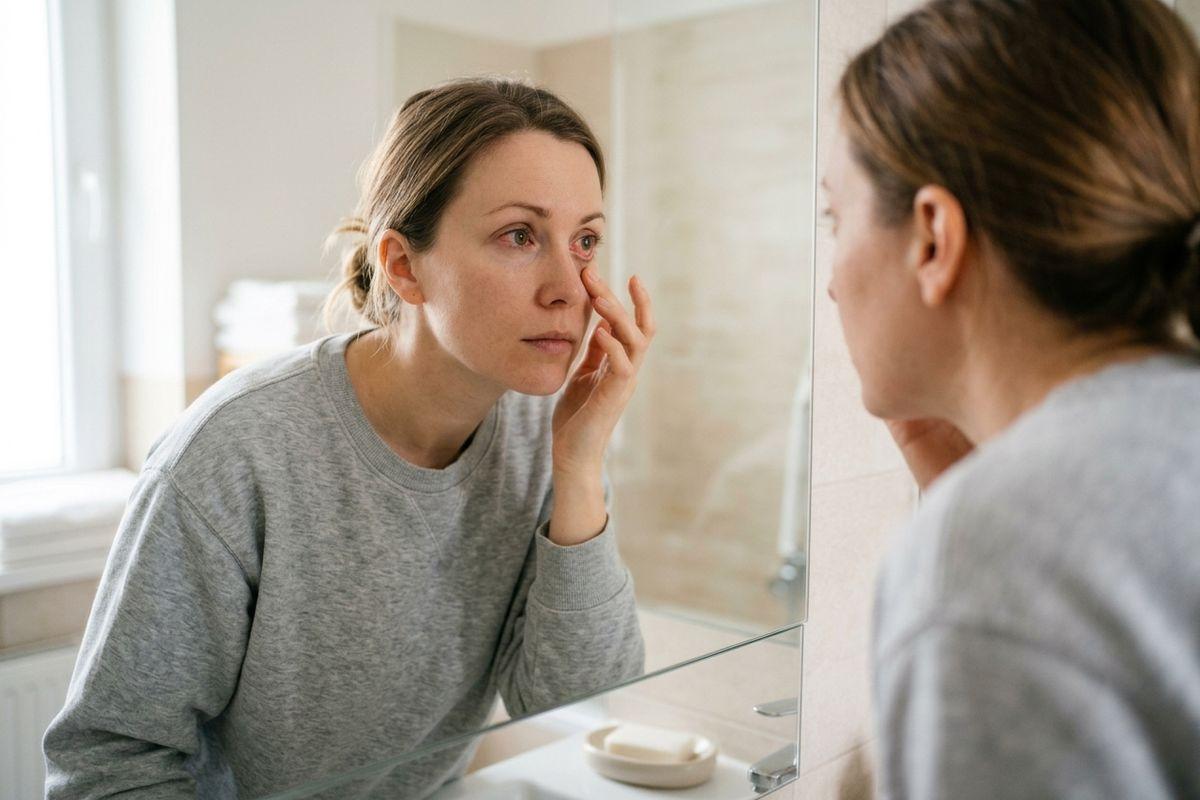
You wake up, look in the mirror, and one eye is red and crusted shut. Pink eye feels like the obvious answer, so you start hunting for drops in the medicine cabinet. Our team at Russell West Optometry sees plenty of red eyes turn out to be something else entirely.
Plenty of other conditions can mimic pink eye, including eye allergies, dry eye, blepharitis, styes, corneal scratches, keratitis, uveitis, blocked tear ducts, and broken blood vessels, which is why a proper eye exam matters before you treat it.
What Pink Eye Actually Looks Like
Pink eye is inflammation of the thin tissue covering the white of the eye. You might notice redness, watery or sticky discharge, and a gritty feeling like sand sitting under your lid. It often begins in one eye and then shows up in the other.
Viral vs. Bacterial Discharge
The discharge itself offers a clue. Viral pink eye tends to be thin and watery with some crusting when you wake up. Bacterial pink eye tends to be thicker and yellowish or greenish, sticky enough to glue your lids together.
Why Symptoms Can Show Up Overnight
Pink eye is a short-term condition with quick onset, so going from fine to fiery red in a matter of hours isn’t unusual.
Contagious forms spread through contact, which is why hand washing and keeping towels separate help at home.
Conditions Commonly Mistaken for Pink Eye
Red, watery, irritated eyes have a long list of possible sources. The look-alikes include eye allergies, dry eye, blepharitis, styes, corneal scratches, keratitis, uveitis, growths on the surface of the eye, broken blood vessels, and blocked tear ducts.
Eye Allergies
Pollen, dust, and pet dander are common culprits behind allergy symptoms. Both eyes usually turn red and itchy at the same time, and the condition isn’t contagious.
If sneezing or a runny nose shows up alongside the redness, allergies move up the list.
Dry Eye and Blepharitis
Dry eye brings burning and a gritty feeling built up gradually, and it tends to stick around long term rather than clearing up in a week.
Blepharitis shows up differently. You may see red lids and flaking along the lashes, with the inflammation sitting right at the lid margins instead of across the white of the eye.
Styes and Corneal Scratches
A stye appears as a tender bump on the edge of the lid, sore to the touch and easy to mistake for general eye redness.
A scratch on the cornea feels different again. Sharp pain, light sensitivity, and constant watering point toward surface damage rather than infection.

Red Eye Signs Worth Prompt Attention
Some red eyes deserve a same-day call rather than a wait-and-see approach. Keratitis involves inflammation of the cornea and can come with blurred vision and pain. Uveitis often shows a red ring circling the iris.
Eye pain or changes in your vision without any discharge is another reason to get looked at quickly.
Contact Lens Wear and Corneal Irritation
Sleeping in lenses, stretching them past their replacement date, or skipping proper cleaning raises your risk of corneal irritation. The tip-off is often a nagging feeling of something stuck in your eye it won’t rinse away.
Less Obvious Reasons for a Pink or Goopy Eye
Not every red eye involves infection or allergies. A broken blood vessel can appear after straining or a bump, leaving a bright red patch looking dramatic while behaving differently than pink eye.
Blocked tear ducts are common in children and can leave an eye watery and goopy. Bumps and growths on the surface of the eye can develop after years of sun exposure.
Glaucoma Drops and Redness
Some glaucoma drops can leave the eyes looking pink, so it’s worth mentioning every drop and medication you use at your appointment.
Autoimmune-Related Eye Inflammation
Longer-lasting redness is sometimes linked to autoimmune conditions. If symptoms keep returning or never fully settle down, that pattern is useful information for the doctor.
How an Eye Doctor in Lindsay Sorts It Out
Sorting look-alikes starts with your story. When the redness began, whether one eye or both, what the discharge looks like, and whether you wear contact lenses all narrow things down. From there, an eye exam helps your eye doctor examine the lid margins, cornea, and tissue over the white of the eye in detail.
Treatment follows the source. Allergy care, lid hygiene, prescription drops, and lubricating drops all serve different problems, so guessing wrong can drag symptoms out longer than necessary.
When redness lingers past a few days, keeps coming back, or arrives with pain or blurred vision, our team at Russell West Optometry can help you figure out what’s behind it. Book an appointment with an optometrist in Lindsay and get a clear answer instead of a guess.